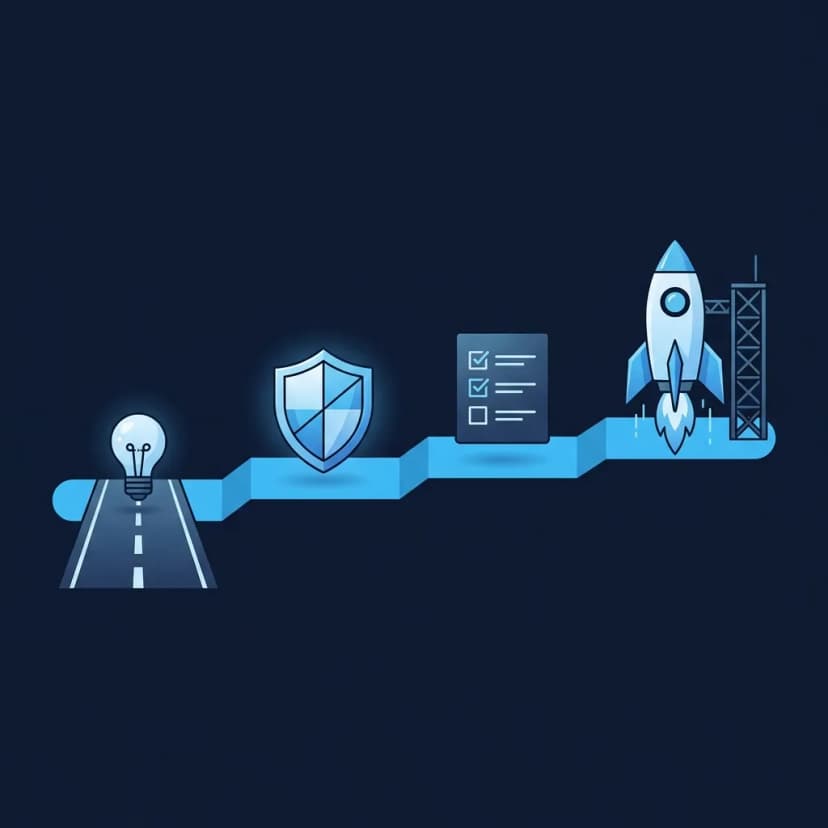
The Model Context Protocol makes something genuinely new possible: AI that can act inside the systems that run your business, through one shared interface instead of a custom integration for every app. That's the exciting part.
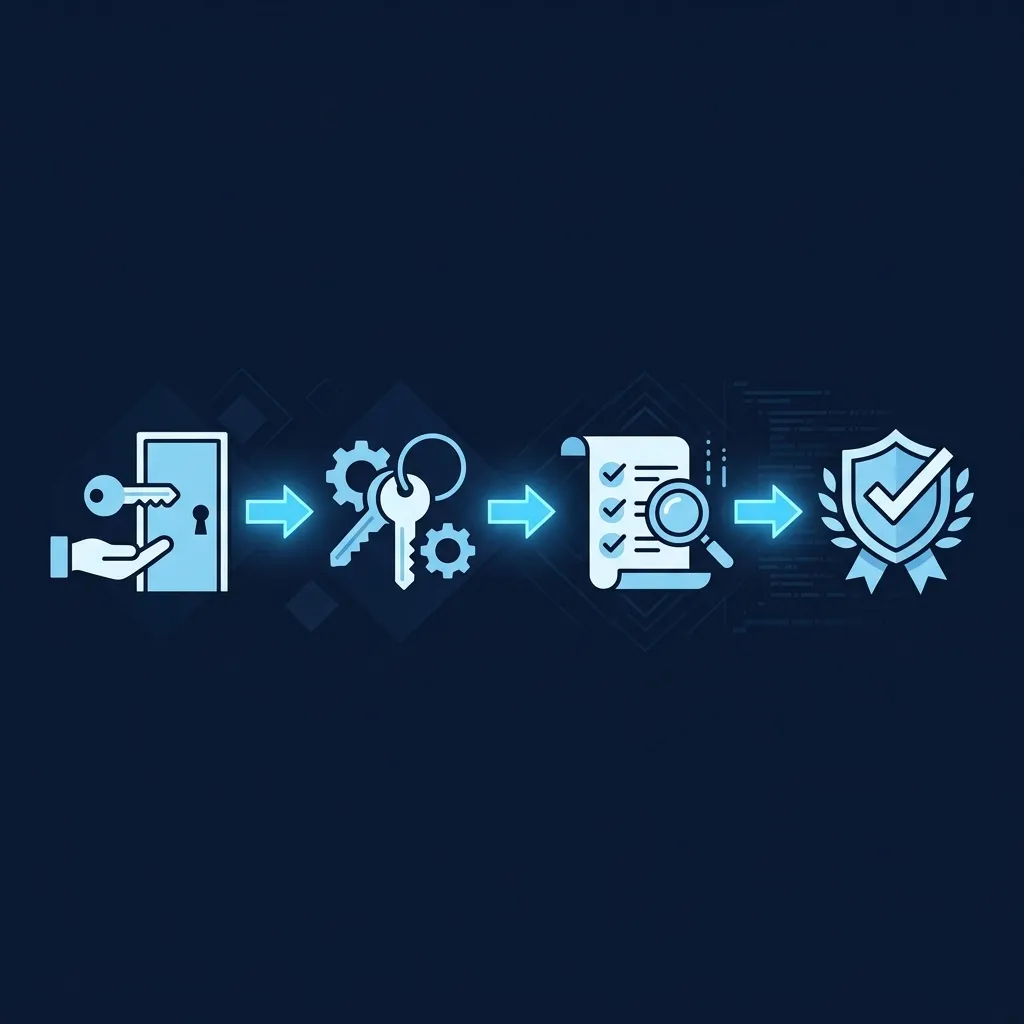 Enterprise IT governance flow — access control, authorization, and audit checkpoints
The less-discussed part is that dropping it into a production enterprise environment is not plug-and-play magic. The moment AI models start touching real systems, a familiar set of IT concerns shows up. None of them are blockers — but each is worth planning for.
Challenges worth planning for
Plug-and-play is the first myth. Out of the box, a generic integration rarely matches how your organization is actually governed. The first real challenge is shaping access to your reality — your entities, your roles, your approval rules — not the protocol's defaults.
Change management. The protocol evolves. In an enterprise, every change carries a tail: regression testing, re-rollout to a lot of people, and the work of proving the change was worth it. Adoption is rarely hard because of the technology; it's hard because of the coordination around it.
Access and authorization. "Let the AI read this, but never that" is easy to say and tedious to enforce per entity, per field, per operation. This has to be enforced in the middle, before anything reaches your systems — not left to the model to self-limit.
Auditability. Compliance will eventually ask who approved an AI-initiated change. If the answer has to be reconstructed after the fact, you have a problem. The audit trail needs to exist from day one.
Vendor lock-in. Some vendor AI is welded to one system's data model and one provider. Adopt it and you've traded a flexible standard for a cul-de-sac. The whole point of an open protocol is to avoid that — so the way you adopt it matters as much as whether you adopt it.
These themes echo guidance circulating in the IT community — see, for example, ByteBridge's write-up, Adopting MCP in the Enterprise: What IT Admins Should Watch For. The framing here is our own.
For a structured path from pilot to full deployment, see our guide to getting each stage right. And if you're weighing whether to build this layer yourself, the hidden costs are worth reading before you commit.
The value of having it handled
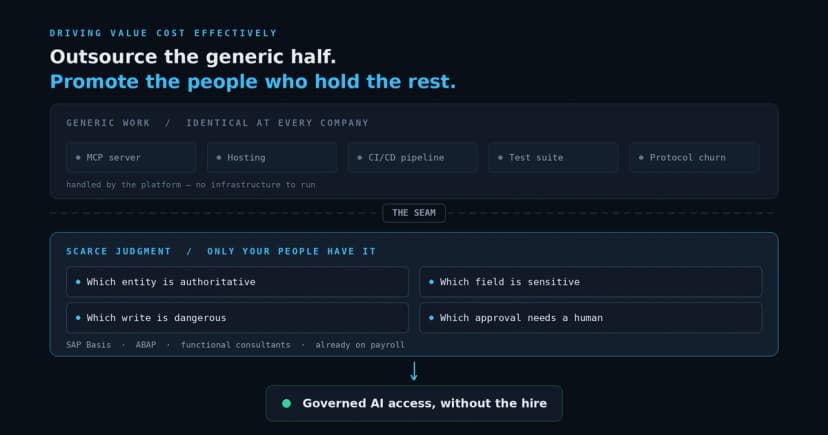
Read that list again and notice something: almost none of it is about the AI. It's about hosting, governance, change management, and accountability — the parts your team would otherwise own forever.
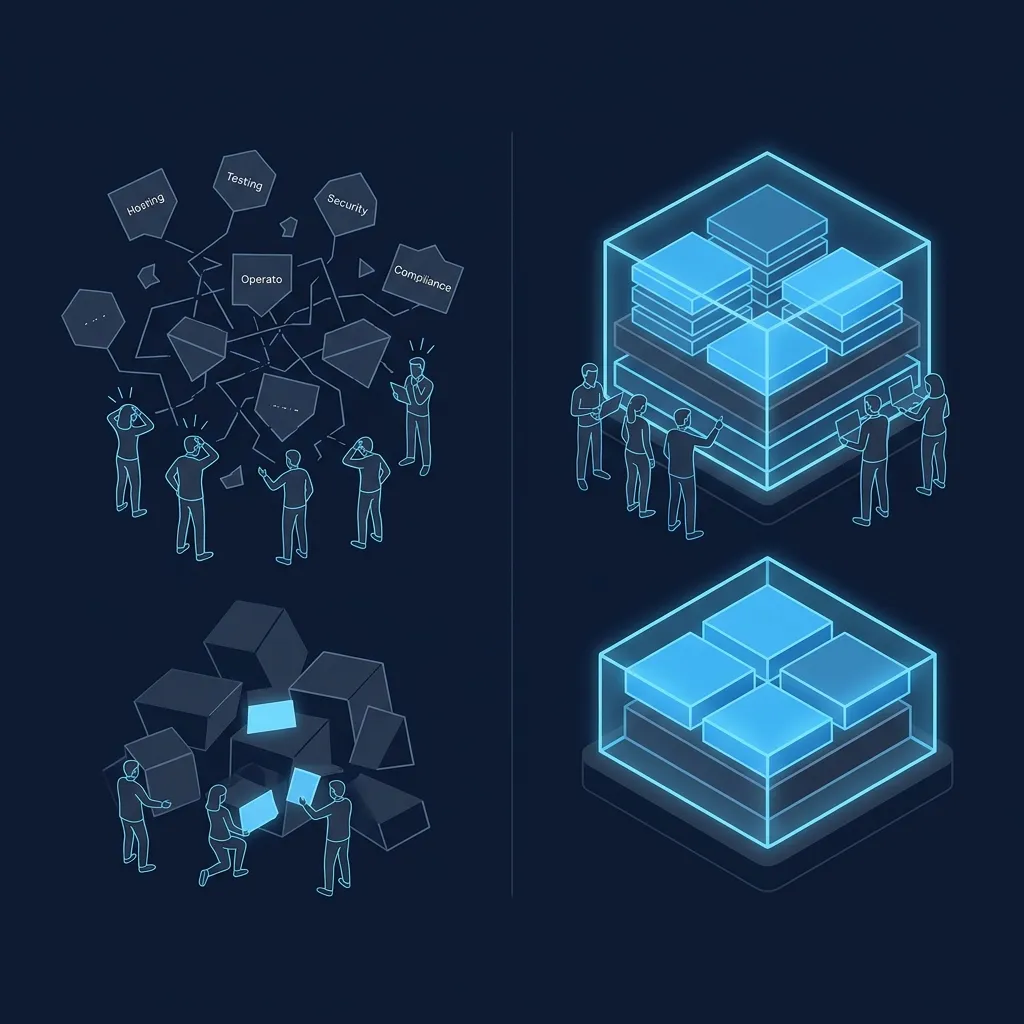 Managed platform absorbing complexity — scattered responsibilities versus a unified governed layer
That's exactly the value of not doing it alone. Plug-and-play isn't realistic, but shaped-to-you is: a governed layer that maps to your access rules, absorbs the protocol churn across every customer, enforces authorization in the middle, ships the audit trail by default, and keeps you on an open standard instead of a vendor dead-end.
The capability is the easy part to get excited about. The challenges above are the work — and they're the work worth handing off.
DataTether is built to carry this work for you. See the full platform capabilities or review our security and governance posture to understand how each challenge above is addressed by default.

 mcp-ui