"We'll just build it ourselves" is a reasonable first instinct. Connecting an AI client to an internal system doesn't sound hard, and a capable engineer can stand up a working prototype in a week.
The prototype is never the expensive part. The bill arrives afterward.
What the estimate usually leaves out
A custom MCP server that touches a system of record is not a weekend script you forget about. It's a piece of production infrastructure, and production infrastructure has recurring costs the first estimate rarely counts:
- Server and hosting. Something has to run, stay up, scale, get patched, and page someone at 2am. Per service you connect.
- CI/CD pipeline. You need a way to ship changes safely. Building and maintaining that pipeline is its own ongoing effort.
- Testing. Unit, integration, security, and regression tests — re-run every time the protocol shifts or a new AI client ships. This is where "done" keeps moving.
- Custom development and hiring. Someone senior has to build it and keep it alive. Skilled gen-AI engineers are scarce, and a hire is a six-figure decision.
And that's before you've built the parts that make it safe: field-level scopes, an approval flow, and an audit trail. A read-only demo has none of those. A production system needs all of them.
 The hidden costs iceberg — the prototype is the tip, infrastructure, testing, security, and hiring lie beneath
The compounding cost
Here is the part that turns a one-time project into a standing line item: the protocol is still young and still moving. Each release can mean another round of implementation, testing, and redeployment — or staying stranded on an old version while the ecosystem moves on.
Now multiply that by every system you connect and every AI client your organization adopts. The "simple" server quietly became a small product your team is on the hook to maintain forever.
This compounding cost is exactly what we explore in why protocol churn is expensive — and why enterprise adoption planning needs to account for it upfront.
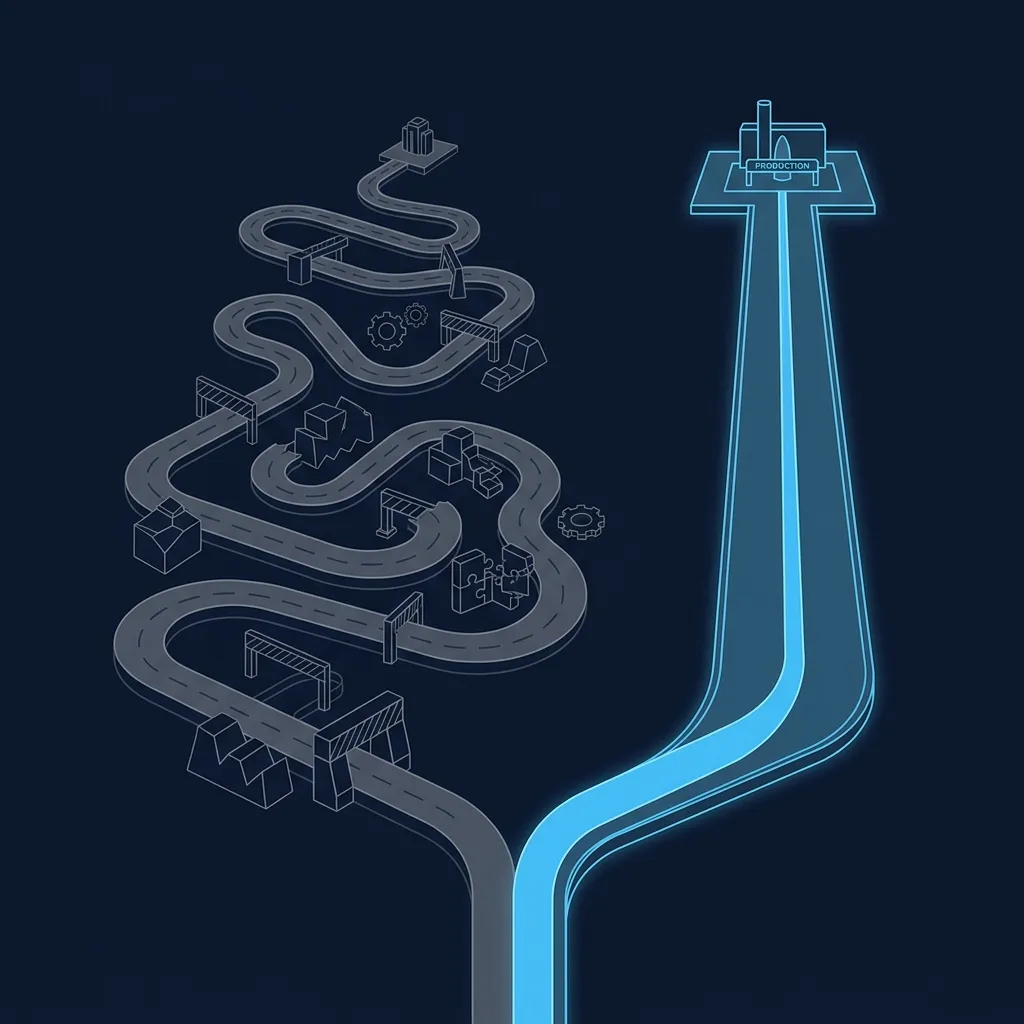 Two paths: building everything yourself versus connecting once through a managed platform
The honest comparison
None of this means building is wrong — sometimes it's the right call. It means the comparison should be honest. The choice isn't "build a server" versus "buy a server." It's "build and run a server, a pipeline, a test suite, a governance layer, and a hiring plan" versus "connect once and let someone else carry all of that."
When you price the whole bill instead of just the prototype, the math usually looks different than the first instinct suggested.
Curious what "connect once" actually looks like? See the DataTether pricing for the honest comparison, or explore the full platform capabilities to understand what's included.


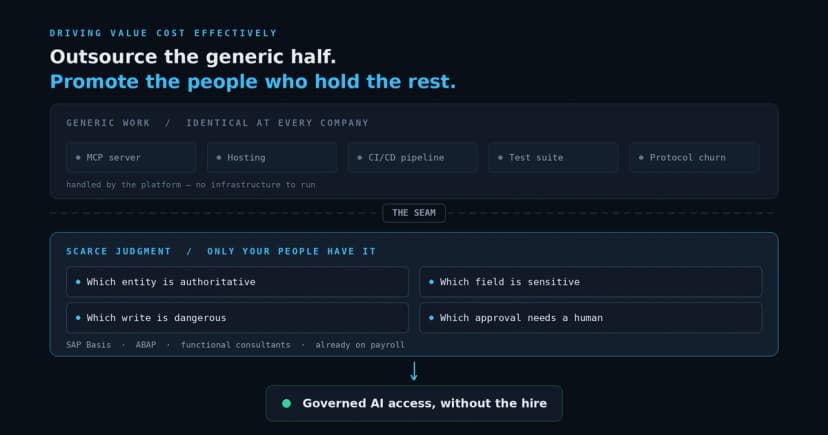 cost
cost