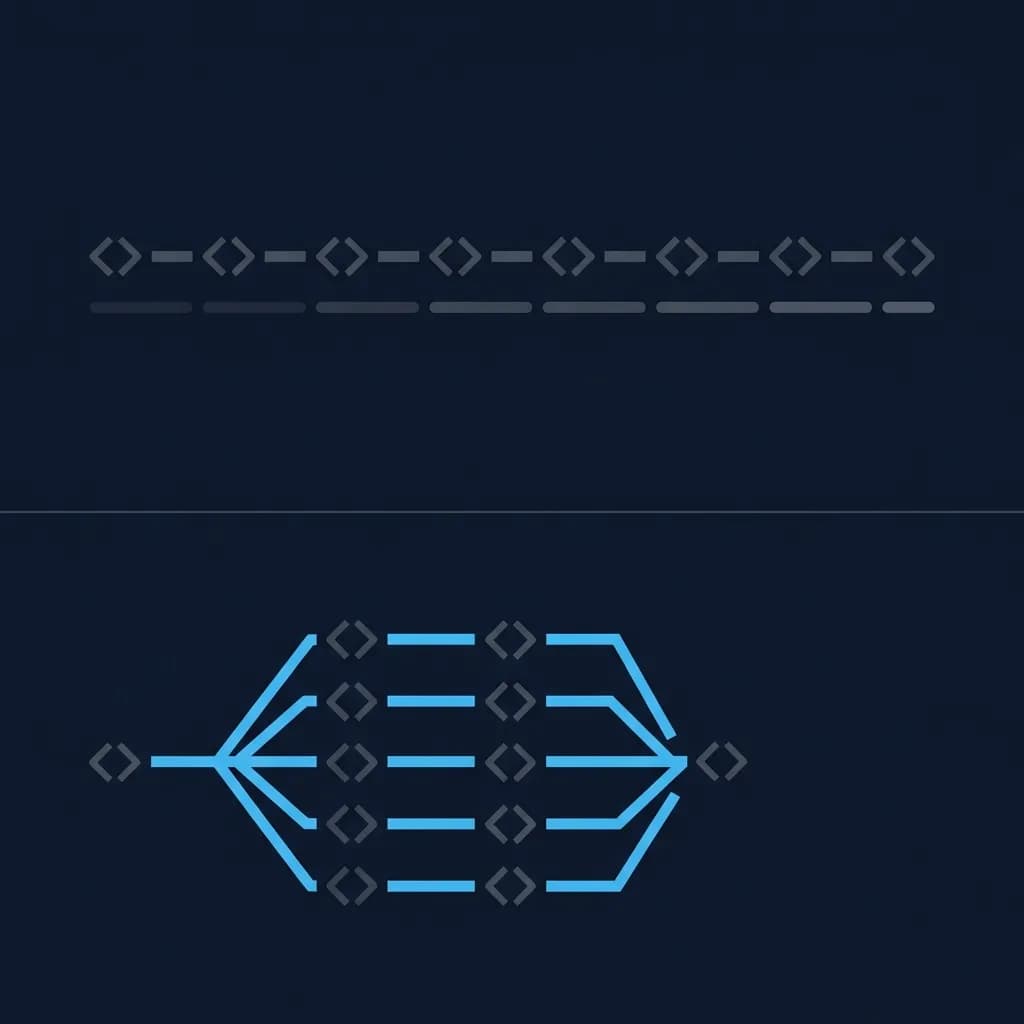
Mapping every API endpoint to its own MCP tool burns context tokens, triggers quadratic roundtrips, and turns agents into fragile state machines. Here is how DataTether's composite tools bundle multi-entity workflows into atomic, token-efficient calls.
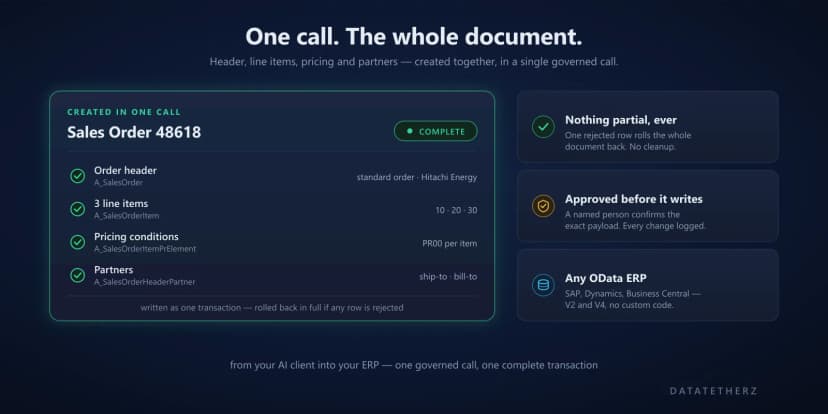
A sales order isn't one record. When AI creates the header but the line item fails, someone has to find and delete the orphan by hand. Atomic writes remove the entire failure class.
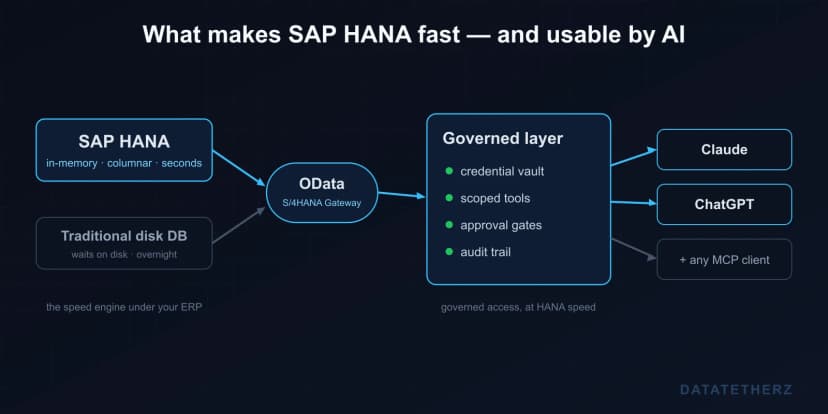
SAP HANA keeps your ERP data in memory and stores it in columns, which is why S/4HANA answers in seconds instead of overnight. Here's what that speed actually buys you — and how AI can tap live HANA-backed data without touching the database or losing governance.
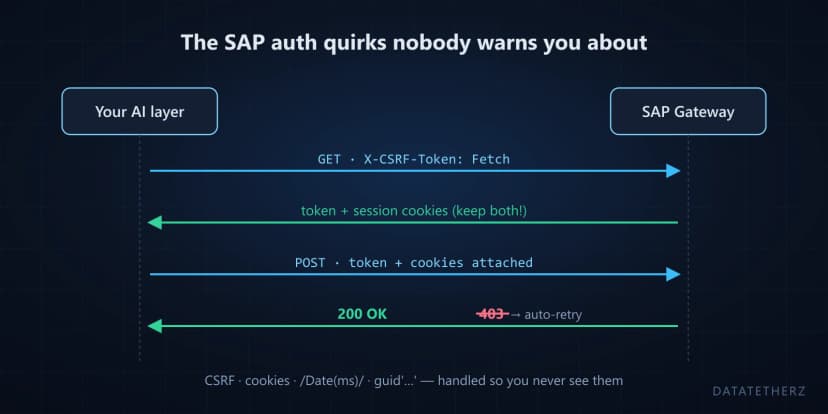
Every generic 'connect AI to your API' demo dies on its first real SAP Gateway service. Here are the four quirks that kill it — and what handling them properly actually involves.
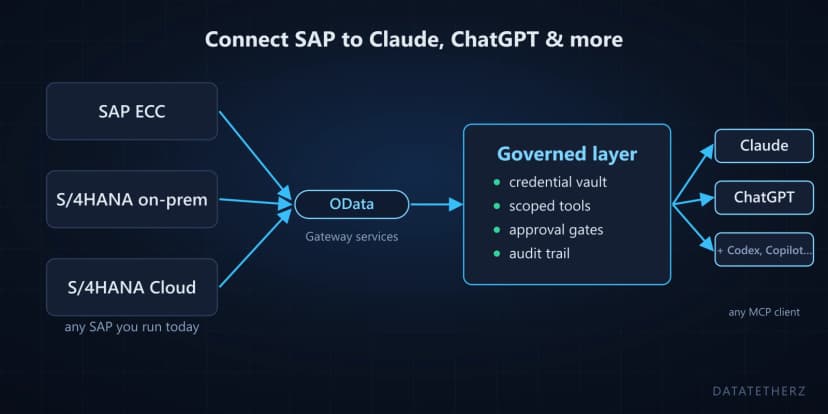
You don't need Joule, a migration, or a custom MCP server to point Claude, ChatGPT, Claude Code, Codex, or any MCP client at your SAP system. If your SAP exposes OData, there is a governed path that takes an afternoon.
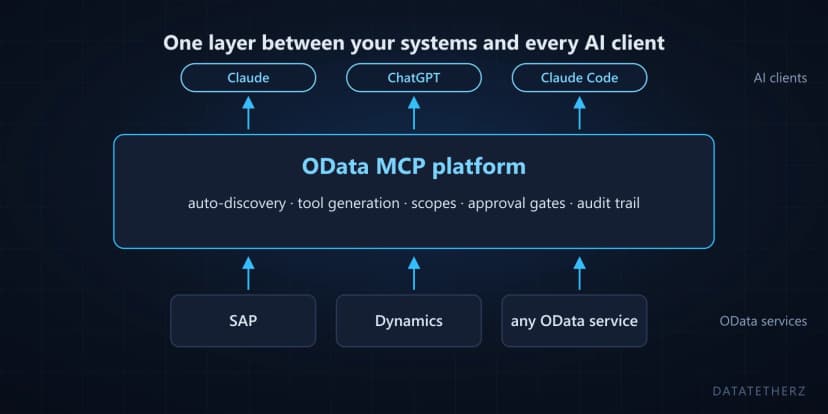
A new layer is forming between enterprise systems and AI assistants: platforms that turn OData services into governed MCP tools. What that means, why it exists, and what to look for in one.
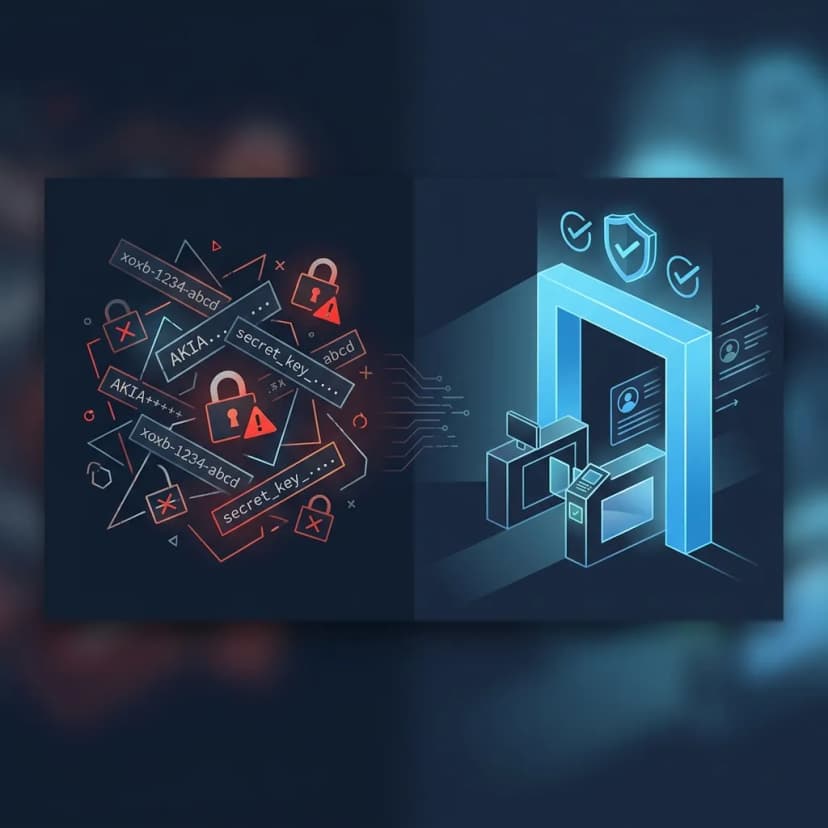
Giving an AI a credential is the fastest way to let it act — and the fastest way to lose control of what it does. Here is the difference a governed layer makes.
An AI assistant that takes thirty seconds to answer stops getting used. When the question spans a lot of ERP records, speed comes from how the tool calls are run.